Double Materiality The Credible Foundation for ESG and Impact Investing
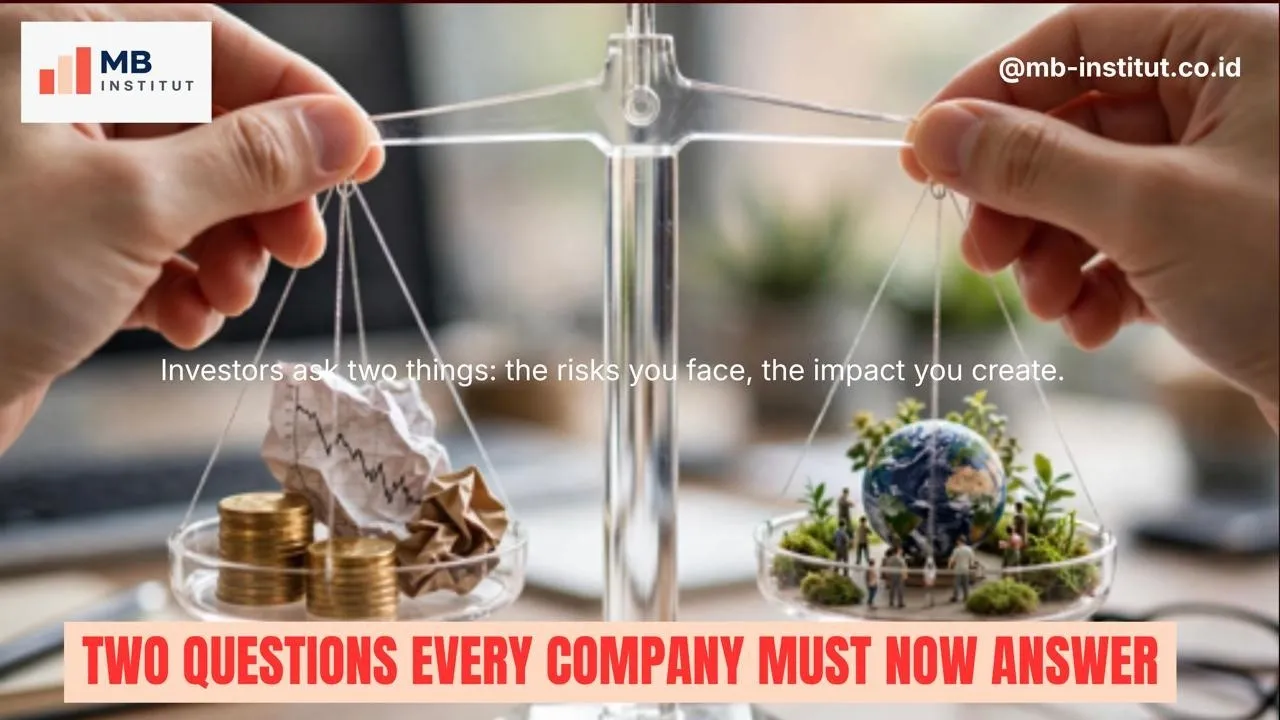
Profit and Impact: Why Companies Now Need to See Both Sides
A company can report record profits and still lose the trust of its investors. That sounds strange until you notice how the questions have changed. For decades, boards asked one thing: what could hurt our bottom line? Today, investors, regulators, and the communities around a business are asking a second question just as loudly: what is this company doing to people and the planet?
Answering both questions at once has a name: double materiality. It may sound like accounting jargon, but the idea is simple, and it is quickly becoming the foundation that makes ESG and impact investing believable.
Two familiar ideas, one missing link
ESG, short for Environmental, Social, and Governance, began as a way for investors to spot risks that numbers alone might miss: a factory vulnerable to floods, a supply chain exposed to labor scandals, a board with weak oversight. In practice, ESG has mostly served the first question. It asks how the world might affect the company.
Impact investing comes from the other direction. It means putting money into businesses deliberately to create real benefits for society or the environment, while still expecting a financial return. Here the second question comes first: what difference does this business actually make?
On their own, each idea has a weakness. ESG without impact can shrink into box-ticking, a report produced to satisfy a checklist. Impact without financial discipline can drift into good intentions that never last. Double materiality is the missing link that holds them together.
Looking from the outside in, and from the inside out
In this context, *material *simply means "important enough to pay attention to and report". Double materiality asks a company to judge every issue through two lenses.
The first lens looks from the outside in. How might changes in the world affect our finances? Take a cement plant. If the government introduces a carbon tax, production costs rise and margins shrink. That is financial materiality, and it is what shareholders, banks, and analysts care about most.
The second lens looks from the inside out. How do our activities affect people and nature? The same cement plant may release dust that leaves nearby families struggling to breathe. That is impact materiality, and it matters most to local residents, employees, government, and impact investors.
The two lenses rarely stay separate for long. A problem that today "only" harms the community can tomorrow become a fine, a lawsuit, or a protest that shuts down operations. What starts as an impact issue often ends as a financial one. Companies that watch both sides see trouble coming earlier, and they spot opportunities that others miss.
What the rulebooks say
The world has not settled on a single way of reporting, and the main standards each lean toward one lens. The **ISSB **standards (IFRS S1 and S2), now the global baseline adopted by a growing number of countries, focus on the outside-in view: sustainability risks that affect a company's money. The GRI standards, the most widely used framework for sustainability reports, focus on the inside-out view: a company's effect on people and nature. The European Union's ESRS, under its CSRD rules, require both lenses together, although Brussels is currently simplifying how far those obligations reach. Indonesia sits somewhere in between. OJK, the financial services authority, already requires listed companies and financial institutions to publish sustainability reports, and TKBI, the national taxonomy for sustainable finance, sets out which business activities count as green or transitional.
The practical lesson is straightforward. Any Indonesian company that sells to Europe or raises money from global investors would be wise to apply double materiality now, even before domestic rules demand it. Putting it into practice A double materiality assessment is less complicated than it sounds. It begins with a map of the whole value chain, from the suppliers who provide raw materials, through the company's own factories and offices, to the customers who use the final product. Impacts hide in every link, not just inside the company's walls.
From that map comes a long list of issues: emissions, waste, workplace safety, fair wages, community rights, corruption. The next step is the one most often skipped, and the most valuable: listening. Talk with employees, nearby communities, government, investors, and buyers, and give the most weight to those who are most affected. They often see what management cannot.
Each issue is then judged twice. Through the inside-out lens, the company asks how severe the impact is, how many people it touches, whether the damage can be undone, and how likely it is to happen. Through the outside-in lens, it asks how likely the issue is to erode or boost revenue, in the short term and the long term.
Finally, the company sets a clear threshold for what counts as important, asks the board to approve the result, and keeps the evidence so auditors can check it. The exercise should be repeated every year, or whenever the business changes significantly.
One link matters above all. The financial assessment must feed into enterprise risk management, the company's system for identifying and controlling risks. When that happens, sustainability stops being a chapter in an annual report and becomes part of how the business is run day to day. Why impact investors care For impact investors, the inside-out lens is the whole point. It is why they invest in the first place. The outside-in lens keeps the business healthy enough for that impact to last.
Double materiality helps them in several ways. It shows whether a company's benefits are genuinely significant, or whether hidden harms quietly cancel them out. It turns material issues into measures of success, such as the number of farmers whose income has risen, often using standard indicators from IRIS+, the catalogue maintained by the Global Impact Investing Network (GIIN).
It also helps investors prove their own role. The key idea here is additionality: showing that a benefit happened because of the investment, and would not have happened without it. And it guards against side harms, so that a solar-panel factory celebrated for clean energy is not, at the same time, paying its workers unfair wages.
Above all, it raises the bar for honesty. The people who supply capital increasingly want evidence of impact that an independent party has checked, not just good stories. Indonesia: public companies in the spotlight In Indonesia, the pressure falls first on companies listed on the Indonesia Stock Exchange. Their shares belong to the public, so every claim they make about sustainability will be tested by investors, analysts, and society at large. State-owned public companies face an even sharper test, because they carry a dual mandate: to deliver returns to shareholders and benefits to the nation.
The incentives are already clear. Global investors and banks increasingly expect credible sustainability reporting before they buy shares or bonds, or extend loans. OJK's reporting rules and the TKBI taxonomy are steadily raising the domestic bar. The exchange's sustainability-themed indices reward companies that perform and disclose consistently, and quietly expose those that do not.
The stakes are highest in sectors such as energy, mining, plantations, food, finance, and infrastructure, where a company's footprint on communities and nature is direct and visible. Many of these companies already run capable risk management teams. What they often lack is the habit, and the skills, of looking outward. That gap is where training and practical support can make the biggest difference.
Where companies go wrong, and how to get it right
The most common mistake is treating double materiality as a desk exercise: a list of issues scored in an internal meeting, with no one from outside the company in the room. The fix is to bring in the people who are actually affected. A close second is reporting only good news. Credibility comes from disclosing negative impacts too, along with a plan to address them.
Many companies also keep their sustainability report in a separate world from their business strategy. Material issues belong in work plans, budgets, and the way the board's performance is judged. Others make bold "green" claims with nothing to back them up, the habit known as greenwashing. Measurable data and independent assurance are the antidote. And too often, the assessment is done once, handed to consultants, and forgotten. It should be repeated every year, and owned by people inside the company who understand the results.
A practical way to begin
The best starting point is modest. Focus the first assessment on fifteen to twenty key issues rather than hundreds. Make sure the material ones enter the corporate risk register, where the board can follow them. Choose five to ten impact measures that can be counted and reported every year. Invest in people who understand both lenses, not just the team that writes the report. Then seek independent assurance, starting light and strengthening it over time.
The bottom line, and beyond it
Double materiality changes how a company sees itself in the mirror. Profit still matters, but it now has to travel alongside responsibility to people and nature. The companies that start early, and do it honestly and measurably, will earn more trust from investors, deeper acceptance from communities, and a head start on rules that will only grow stricter.
Glossary
- Additionality : Evidence that a benefit happened because of the investment, and would not have happened without it
- Double materiality : Looking at both sides: how the world affects the company's finances, and how the company affects the world
- ERM : Enterprise risk management: the company's system for identifying and controlling risks
- ESG : Environmental, Social, and Governance: three areas used to judge whether a company is run responsibly
- Greenwashing : Claiming to be environmentally friendly without adequate proof
- Impact investing : Investment deliberately made to create real benefits for society or nature, while still seeking a return
- IRIS+ : A catalogue of impact metrics used by impact investors worldwide
- ISSB, GRI, ESRS : International rulebooks for preparing sustainability reports
- Materiality : How important an issue is, and whether it needs attention and reporting
- OJK : Otoritas Jasa Keuangan, Indonesia's financial services authority
- TKBI : Indonesia's Taxonomy for Sustainable Finance: a reference list of business activities classed as green or transition
Note: rules in this field change quickly. Check the latest ISSB, EU, and OJK requirements before publishing.
About the author
Dr. Ir. Eddy Keleng Ate Berutu, MA, ChFC, CFP brings together two worlds that rarely meet: frontline public leadership and corporate governance. As Regent (Bupati) of Dairi, North Sumatra, from 2018 to 2025, he led a regional government through the COVID-19 pandemic, keeping a key crossroads region open under strict, risk-based controls, an experience that shaped his conviction that good governance means managing risk and impact together.
Before entering public office, he built his career in financial services, holding key positions at Prudential and Bank Bali, experience reflected in his ChFC and CFP credentials. Today he serves as Director of PT Mutu Bangsa Indonesia, the company behind MB Institut, which he founded, and is Co-Founder of DEX WORK, a business co-working hub under PT Prima Havendex in Central Jakarta. MB Institut is a training institute focused on governance, risk and compliance (GRC), enterprise risk management, leadership, and quality and compliance certification for corporations and state-owned enterprises. Within KADIN Indonesia, the Indonesian Chamber of Commerce and Industry, he holds roles covering regional governance, the national free nutritious meals programme (MBG), and green infrastructure, and he serves on the Advisory Board of GAMDI. His work sits at the intersection of Indonesian public administration, OECD governance frameworks, and the institutions that connect government, business, and communities.